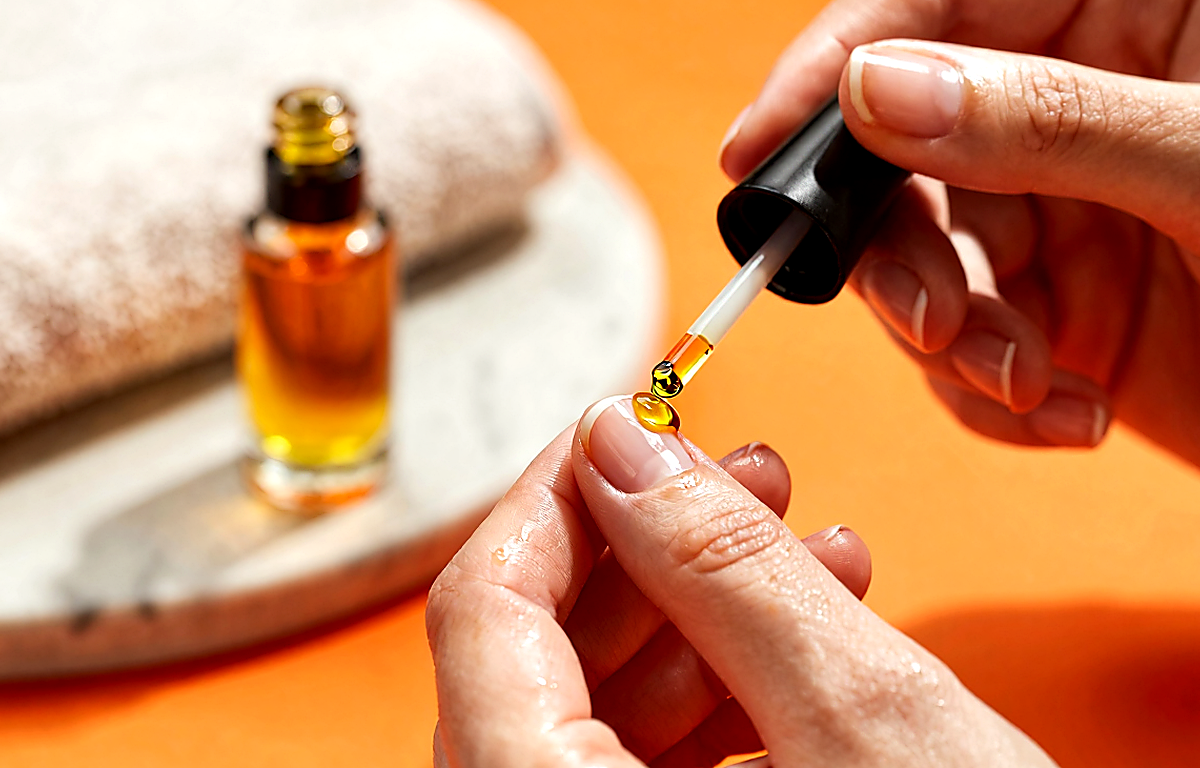
In short: cuticle oil should not be something you use only “once in a while after a manicure,” but a regular habit—applied in a small amount along the cuticle line and sidewalls, then gently massaged in for 20–30 seconds. This simple routine helps keep the skin around the nail from drying out, fraying, and making even a neat manicure look tired after just a couple of days. When the area at the base of the nail looks moisturized and smooth, your hands look more polished overall and the polish itself looks fresher.
The main rule is simple too: a little, often, works better than a lot once in a while. One generous application a week is usually not enough if you wash your hands often, use sanitizer, come into contact with household cleaners, or love hot water. In most cases, applying it 2–4 times a day gives a noticeable result, and it is especially helpful in the evening and right after contact with water. Below, you’ll find exactly how to use it, what kind of oil to choose, and why it really changes how your manicure looks—even if you haven’t refreshed the polish.
Why cuticle oil matters in the first place
The cuticle and the skin around the nail lose softness quickly. Water, soap, sanitizers, cold weather, air conditioning, dry air, heavy cleaning, and even the habit of touching or pushing back the cuticle too aggressively all play a role. As a result, you get dryness, small hangnails, a whitish cast, and rough texture. These are the details that most often create the feeling that your manicure is “not what it was,” even if the nail color or gel polish still looks decent.
Cuticle oil works as an everyday care step: it softens the surface of the skin, makes it more supple, visually smooths dry areas, and adds that polished, well-groomed finish. It does not “fix everything,” but it helps keep the cuticle area in the kind of condition that makes a manicure look neater between salon visits or at-home touch-ups.
- reduces the feeling of dryness and tightness;
- softens the cuticle before gently pushing it back;
- improves the look of the sidewalls;
- makes the nail plate look smoother and more polished;
- helps hands look tidy even without fresh polish.
Simply put, oil is not a decorative extra, but a basic step in hand care. Just as a lightweight body cream in summer changes how your skin feels day to day, cuticle oil changes the overall impression of your manicure through the small details of care.
How to use cuticle oil properly
The most common mistake is to dab it on and immediately forget about it. To get a visible result, it is best to apply oil intentionally—but without turning it into a complicated ritual.
- Use only a small amount. One tiny drop or a single touch of the brush is usually enough for one nail. More will not make it work faster; it will just leave a greasy film.
- Spread it over the cuticle and sidewalls. Not only in the center at the base of the nail, but also along the edges where dryness tends to show up most often.
- Massage it in gently. Circular motions with your fingertip for 20–30 seconds help distribute the product better and keep it from just sitting on top.
- Let it absorb. If you are not about to polish your nails right away, just leave the oil on the skin. If there is visible excess, blot it with a tissue after a few minutes.
- Repeat regularly. Small applications throughout the week work better than one “intensive” use before a manicure.
If you wear gel polish, you can and should use cuticle oil between appointments. It does not have to ruin the look of the coating if you apply it moderately and do not keep saturating the nails right before you plan to glue, buff, or repaint anything.
Especially good times to apply it:
- after washing your hands, if your skin dries out quickly;
- after a shower or bath;
- after cleaning and contact with household chemicals;
- during the day after using sanitizer;
- before bed—as the most reliable evening ritual.
How often to apply it for a noticeable effect
Frequency depends less on the brand and more on the condition of your skin and your lifestyle. If your cuticles are dry, rough, and quick to develop hangnails, once a day is often not enough. If your skin is already soft and your hands do not get overly dry, a maintenance routine may be enough.
A helpful guideline looks like this:
- Very dry cuticles: 3–4 times a day for 1–2 weeks, then switch to a maintenance routine.
- Normal skin, but your manicure quickly loses its tidy look: 2 times a day—once in the morning or daytime and обязательно in the evening.
- Maintenance: 1–2 times a day, plus after heavy contact with water.
If you are only just starting to use cuticle oil, do not expect everything to change after one evening. The moisturizing effect is visible quickly, but a truly neater-looking cuticle area usually becomes obvious after several days of regular care. Trying to “rescue the situation” only before a photo or before going out rarely works for long: the dryness still comes back.
There is also a seasonal aspect. In autumn and winter, when the air is drier and temperature swings are harsher, oil is almost always needed more often. Summer may be easier, but frequent hand-washing, the sea, the sun, and air conditioning can also dehydrate the skin easily.
When it is best to apply oil: before a manicure, after, or every day
The right answer is: at different times for different purposes. Oil is not meant only for the end of the procedure.
Before a manicure. If you are doing at-home care without applying polish right away, oil helps soften the cuticle and makes it easier to gently push back. But if you are about to paint your nails or work with a base coat, it is important to thoroughly degrease the nail plate before applying the coating: oil residue reduces adhesion.
After a manicure. This is the most obvious moment. Oil quickly makes the nail contour look neater, removes that dry, “dusty” look from the skin, and gives the hands a finished, salon-like appearance.
Every day between manicures. This is where the main benefit lies. Regular care helps keep the cuticle from getting to the point where it starts catching, peeling, and spoiling the overall impression of your hands.
If you do your nails at home, a useful rule to remember is this: oil is for the skin—after all steps related to coating adhesion are complete. In other words: nail prep first, then base, color, top coat, and only after that the oil as the finishing care step.
How to choose a cuticle oil without falling for extra promises
There are many of these products on the shelf, and the marketing often promises almost instant transformation. In reality, it is better to look not at how loud the promises are, but at how comfortable the texture feels and how regularly you will actually use it.
Pay attention to a few things:
- Format. A brush is convenient at home, a pen or rollerball is practical in a bag, and a dropper bottle works well for evening care.
- Texture. Lighter oils are more comfortable during the day, richer ones in the evening or in the colder season.
- Fragrance. A strong scent gets annoying quickly, especially if you apply the product several times a day.
- Ingredients. Jojoba, almond, apricot kernel, avocado oil, squalane, and vitamin E are common. You do not need to hunt for the most complex formula: what matters more is that you like the product and it does not irritate your skin.
- Ease of frequent use. If the bottle is awkward or leaves too greasy a residue, you will simply skip it.
If your skin is sensitive, it is better to choose calmer formulas without aggressive fragrance components. If you notice persistent stinging, redness, or itching after applying it, stop using the product. If there is ongoing burning, pain, pronounced swelling, signs of infection, or signs of nail disease, it is better to see a doctor. During pregnancy, and when using retinoids or other active skincare routines, it is also sensible to discuss irritating products around the nails with a specialist if your skin has become noticeably reactive.
If you generally like a simple, uncluttered approach to care, this follows the same “less, but regularly” logic that works in other beauty routines too. In facial skincare, for example, what matters is not overload but a clear step-by-step system: how to build a basic skincare routine for your face.
Mistakes that make cuticle oil less effective
Sometimes the product is there, but the cuticles still look dry. Most often, the issue is not the oil itself, but how it is being used.
- Applying it only once a week. Irregular care has very little long-term effect on how the cuticle looks.
- Using too much at once. This does not give a proportionally better result, but it does get in the way in everyday life and creates a sticky, greasy feel.
- Skipping the massage. A quick touch with the brush works less well than 20 seconds of gentle rubbing.
- Ignoring hand cream. Cuticle oil does not always replace full hand hydration, especially in the colder season.
- Contact with water right after applying it. If you go wash dishes immediately, the effect will be minimal.
- Trying to compensate for a traumatic manicure with oil. If the cuticle is constantly cut too deeply or frequently damaged, oil alone will not solve the issue.
- Using it right before applying polish without degreasing. Then the wear of the coating suffers, and the oil itself seems to be the problem.
Another common mistake is thinking that cuticle oil is only for people with dry skin. In reality, it is also useful for those whose cuticles are already in normal condition, if the goal is to keep a manicure looking polished for longer.
What to do if your cuticles are very dry and you keep getting hangnails
If the skin around your nails is already in poor shape, it is worth switching to a short recovery routine without drastic measures. There is no need to aggressively cut every uneven bit “down to nothing” or endlessly buff the skin’s surface. A combination of gentleness and consistency works much better.
- For 7–10 days, increase how often you apply oil to 3–4 times a day.
- Add hand cream after every wash, especially if the skin is dry not only around the nails.
- At night, apply a richer layer of oil or a nourishing balm and, if you like, seal it in with cream.
- Try not to pull off hangnails with your hands—this almost always makes things worse.
- Wear gloves while cleaning, and after contact with water, go straight back to your care routine.
If hangnails keep appearing, it helps to look at the bigger picture. The issue may not be the oil alone, but your overall level of skin dryness, frequent hand-washing, a habit of picking at the cuticle, or an overly aggressive manicure technique. Sometimes it is more useful to simplify everything for a while and focus on repairing the skin barrier.
Do not ignore symptoms that go beyond ordinary dryness. If there is significant pain, throbbing, swelling, oozing, or a change in the color of the skin or nail, this is not a situation for a home experiment with oils. In that case, you need a doctor’s evaluation.
Can you replace oil with a cream, serum, or balm?
Sometimes yes, but not always completely. Hand cream is great for maintaining overall skin comfort, but not every cream gives the same “finished” look to the cuticle area that oil does. On the other hand, oil alone is not always enough if your hands are generally very dry.
A practical way to think about it is:
- Hand cream — the base for the skin of the hands overall.
- Cuticle oil — targeted care for the contour around the nail.
- Balm or richer treatment — a nighttime or recovery option during periods of severe dryness.
If you do not like greasy textures, you can use a lighter cuticle product during the day and something richer in the evening. In essence, this is the same principle as seasonal body care: during the day you want comfort without stickiness, while in the evening you can choose something more nourishing. A similar approach is illustrated well by the topic of summer body textures: a lightweight body cream for summer without stickiness.
If you do not have a dedicated oil on hand, you can apply a rich cream or balm to the cuticle area as a one-off. But in the long run, a dedicated format is usually more convenient precisely because it is easier to use often and with precision. And consistency matters more here than a perfect ingredient list.
How to make your manicure really look fresher for longer
Cuticle oil is an important part of it, but the strongest effect appears when it becomes part of a few simple habits. Then your hands look cared for not only on manicure day, but also several days later—or even a week later.
- Apply oil every day, not just when you feel like it.
- Keep one product at home and another in your bag or on your desk.
- After every hand wash, give your skin at least a little care back.
- Do not cut the cuticle too often or too deeply if that only makes it rougher afterward.
- Use gloves for cleaning and for prolonged contact with water.
- Do not forget hand cream, especially in the colder season.
- Before refreshing your polish, thoroughly degrease your nails if you have used oil beforehand.
There is also a purely visual factor: a moisturized cuticle makes the polish shade look better and the nail shape look neater. Even a nude color, which can quickly start to fade into the background on its own, looks more elevated and fresher against well-cared-for skin. So oil works not only as care, but also as a small beauty trick that enhances your manicure result without extra expense or complexity.
To sum it up, the best way to use cuticle oil is not to wait for an emergency. Apply a small amount, but do it regularly; massage it in gently; pair it with hand cream; and protect your skin from drying out. That is what really helps a manicure look fresher, and your hands look neater—even on the days when a new coat of polish is still a long way off.