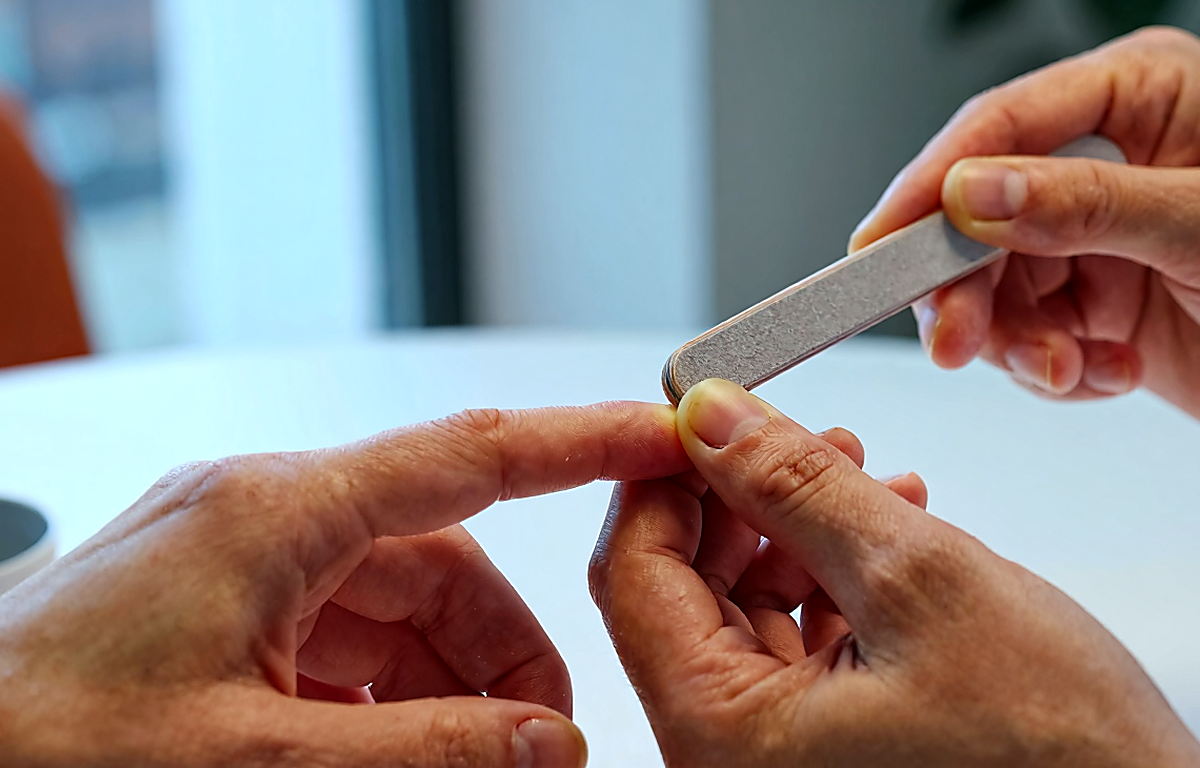
If the nail plate looks uneven and filing leaves roughness, fine grooves, or a frayed-looking edge, the issue is often not the brand itself but the combination of three factors: the file’s grit, your filing technique, and the nail’s current condition. Even a quality file from a well-known range, including popular OPI products, will not give a neat result if the grit is too harsh, the nail is overfiled in one spot, or the plate has already been weakened by coating removal, water, household chemicals, or the habit of filing length in a rush.
The main things to check right away are whether the file is suitable for natural nails, whether you are pressing too hard, whether you are using a back-and-forth motion on the edge, and whether the plate shows signs of thinning. Unevenness is often made worse not by one wrong move but by a repeated care pattern. The good news is that in many cases the situation can be improved noticeably without complicated steps: it is enough to reassess the tool, make filing less traumatic, and give the nail plate a gentler routine for a few weeks.
Below is a detailed breakdown of what matters most if an uneven nail plate is bothering you and you are choosing a file in a category such as OPI or comparing similar professional formats for home care. This article is not about “magic smoothing,” but about practical signs that help you understand what may be preventing the nail from looking smoother right now.
Why the nail plate becomes uneven
An uneven nail plate is not always a deep problem and not always the result of one product. More often, it is the visible outcome of accumulated stress on the nail. For some people it shows up as longitudinal ridges; for others as bumpiness, spot-like roughness, splitting at the free edge, or fine waves near the sidewalls.
The most common causes look like this:
- a file that is too harsh for natural nails — it removes layers quickly and makes the edge uneven;
- excess pressure while filing — this increases friction and micro-damage;
- back-and-forth filing motions — they can make the free edge fray more easily;
- filing the same area repeatedly — this can thin one section and make the surface look less even;
- a weakened nail plate — after coating removal, frequent contact with water, or household chemicals, the nail becomes more vulnerable to roughness and splitting.
In practice, several factors are often present at once. That is why it is more useful to assess the whole routine than to look for one “bad” product.
What to check first if you use a file from a professional range
1. Grit: is it too rough for natural nails?
The first thing to evaluate is the file’s abrasiveness. If the grit is too aggressive for natural nails, the edge may look rough even if you work carefully. A file that removes material too quickly can create a visually uneven line and make existing thin areas more noticeable.
If the nail plate is already fragile, choose a gentler approach rather than trying to shape the edge faster. Speed is rarely the goal when the nail is prone to roughness or splitting.
2. Pressure: are you pressing harder than you think?
Many people press more than they realize, especially when trying to smooth an uneven edge quickly. Strong pressure does not make filing more accurate. It usually makes the process more traumatic and increases the risk of fraying, heating, and local thinning.
A good check is simple: if you feel that you need force to make the file “work,” the combination of pressure and grit may already be too harsh for the current condition of the nail.
3. Motion: are you using a back-and-forth movement?
When the edge is already dry or weakened, a back-and-forth motion can worsen the frayed appearance. A more controlled technique is usually less traumatic than rapid sawing movements, especially if your goal is to refine the shape rather than remove a lot of length at once.
If unevenness appears mainly after filing, the technique itself may be contributing more than the file brand.
4. Nail condition: is the plate already thinned or stressed?
Sometimes the problem is not the file but the nail’s starting point. If the plate has become thinner after removing coating, frequent soaking, cleaning without gloves, or repeated mechanical stress, even a decent file may seem to “work badly” simply because the nail reacts more sharply.
In this case, changing the tool alone may not be enough. The nail plate often needs a gentler routine and less repeated stress for a period of time.
Signs that filing is making the unevenness worse
Pay attention to the small signals that appear after shaping the nails. They often show whether the routine needs to be adjusted.
- the free edge looks fluffy or frayed;
- fine grooves appear after filing;
- one area becomes noticeably thinner than the rest;
- the sidewalls start to split more often;
- the surface looks rougher after each correction of length.
If you notice several of these signs at once, it makes sense to reduce the intensity of filing and review both the file type and your technique.
How to make filing less traumatic
If your goal is a neater result, the safest strategy is not to “polish away” the problem aggressively, but to reduce the factors that keep stressing the nail plate.
- choose a file appropriate for natural nails rather than an overly harsh option;
- use lighter pressure;
- avoid rough, rapid back-and-forth movements if the edge is already vulnerable;
- do not keep filing the same point in an attempt to force perfect symmetry;
- give the nails a gentler routine for a few weeks if they look weakened.
Often this alone is enough for the edge to look smoother and more even over time.
When not to blame the file alone
It is easy to focus on one product, especially if the unevenness becomes noticeable after filing. But the file is only one part of the picture. Water exposure, household chemicals, frequent coating removal, and repeated mechanical stress can all affect how the nail plate looks and reacts.
If the same issue happens with different files, the cause is more likely to be the condition of the nails or the overall care pattern rather than one specific brand.
When it is better to pause aggressive filing
If the plate looks very thin, the edge splits easily, or filing causes clear worsening, it is better not to intensify the process. Trying to smooth the nail aggressively can increase the damage instead of improving the appearance.
In such a situation, a gentler routine and a temporary reduction in mechanical stress are usually more sensible than frequent correction.
When to seek professional advice
If unevenness is pronounced, appears suddenly, is accompanied by pain, discoloration, marked brittleness, or changes that do not improve with gentler care, it is worth consulting a specialist. Persistent changes in the nail plate should not be ignored or masked by more aggressive filing.
A file can affect the appearance of the edge and surface, but it does not solve underlying problems with the nail plate.
The bottom line
If an uneven nail plate is bothering you, start with four practical checks: the file’s grit, the amount of pressure, your filing motion, and the nail’s current condition. In many cases, the problem is not a specific OPI file or another professional format by itself, but a mismatch between the tool and what the nail can tolerate right now.
The most useful approach is calm and consistent: reduce trauma, avoid harsh technique, and give the nail plate time to recover. That is what most often helps the nails look neater without myths or unnecessary complications.