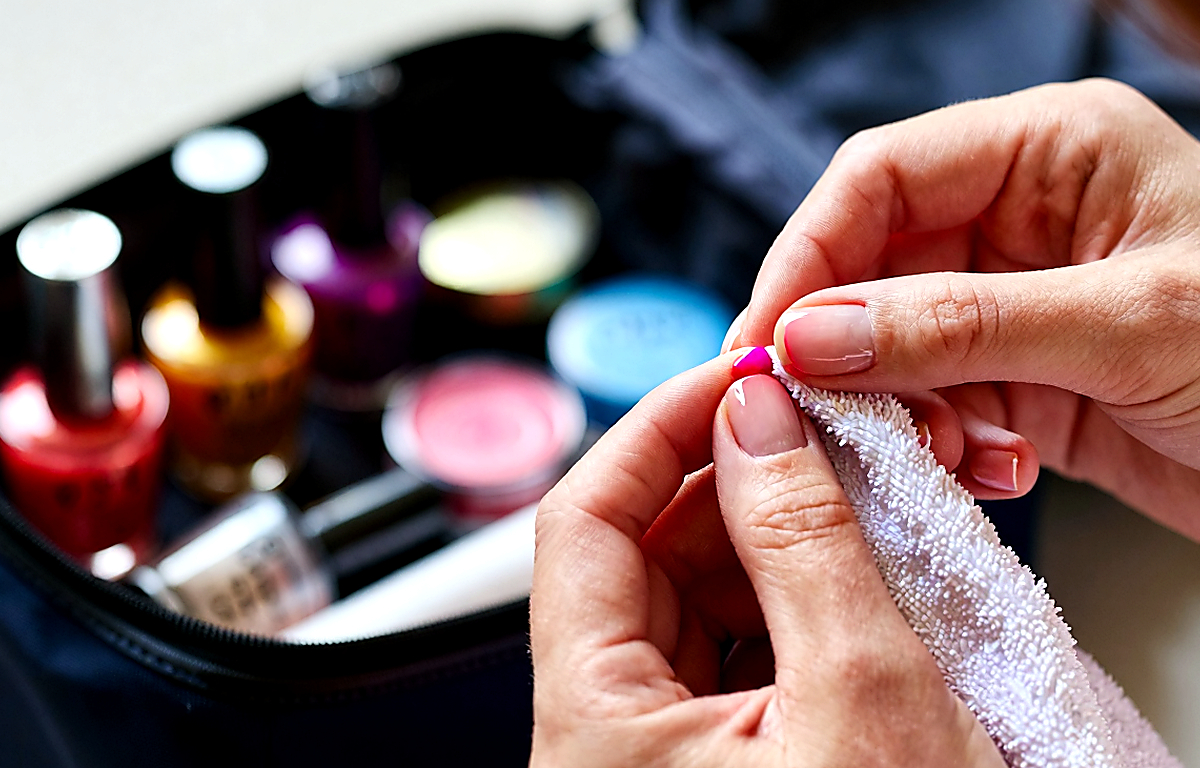
If your cuticles became drier after using a nail strengthener, the skin around your nails started to feel tight within a day, and small hangnails began appearing more often, the issue is usually not one “bad” bottle but a combination of factors: the formula, how often you apply it, aggressive degreasing, your remover, and the lack of basic care for the skin around the nails. With OPI, as with other popular brands, there are different strengthening products built around different approaches: some create a harder film, others work more like a protective coating, and some are meant to be used as a course. That is why, if dry cuticles are a concern, it is important to look not only at the product name but also at how exactly you wear and remove it.
The most useful guideline is simple: if the strengthener helps the nail plate but the skin around the nail becomes rough, flaky, and sensitive, your routine needs to be adjusted right away. First, assess whether you are refreshing the coating too often, using acetone-based removers, or applying the product too close to the skin. Then add cuticle oil, gentler removal, and breaks between layers if the brand instructions allow it. Very often, these steps alone are enough to keep the strengthening effect without that feeling of a “dry ring” around the nail.
Why dry cuticles show up specifically with strengthening products
A nail strengthener is usually seen as care, but in practice it is also a functional coating. It forms a film on the nail plate, increases rigidity, reduces breakage, smooths over unevenness, or protects length. Meanwhile, the skin around the nail is often overlooked in this system. If your nails look better but your cuticles look worse, there may be several reasons.
- The product does not dry things out on its own, but through the way it is used: frequent removal, repeated degreasing, and contact with solvents.
- The film may be too rigid for thin, dehydrated nails, and you start correcting the coating more often and touching the skin around the nails more.
- The formula or accompanying products may cause irritation: not necessarily an allergy, sometimes simply a reaction to overdrying.
- The product is applied too close to the cuticle and sidewalls, and as it shrinks or is removed, it catches the skin.
- There is a general lack of care: too little oil, too little hand cream, and not enough protection from water and household chemicals.
In other words, the strengthener may not be the direct cause but a trigger that highlights dryness that was already there. This is especially noticeable if you wash your hands often, work with sanitizers, like very hot water, or do your manicure at home in a rushed way.
What to check in the OPI product itself or a similar strengthener
A popular product is not the same as a universal one. Even if a product is well known and works for many people, your skin may not tolerate its texture, wear pattern, or level of rigidity. When choosing a strengthener, it is worth looking not only at the promise to “strengthen,” but also at the context: what your nails are like and how the skin around them behaves.
Check the following points:
- What the product is designed to do. Some strengtheners are for brittle nails, some are made for peeling nails, and some are protective coatings meant for temporary support. If your nails are thin and your cuticles are dry, an intensive-feeling course may simply be uncomfortable.
- Whether it is meant to be used as a course or worn continuously. Some products work better for a limited period rather than layer after layer indefinitely.
- What kind of finish it gives. The denser and more rigid the coating feels, the more carefully you should approach removal and the timing between refreshes.
- How comfortable it feels during application. Sharp burning, a strong odor, or itching around the nails is a reason to stop using it.
- How the cuticles look after 24–72 hours. This matters more than the first impression. If the shine looks pretty but the skin quickly feels tight, the product either needs a different care routine or is simply not right for you.
If you are choosing OPI as a familiar benchmark, think in terms of the scenario, not the brand: do you really need a strengthener, or would a protective base, a gentler manicure routine, and consistent cuticle care be better? Sometimes the issue is not weak nails, but dehydration in both the nails and the skin.
Application technique: mistakes that can make cuticles even drier
Even a good product can become uncomfortable if it is applied incorrectly. The most common mistake is bringing the brush too close to the cuticle in hopes of getting a “salon” result. In reality, the liquid product can flood the side pockets, dry down on the skin, and lead to irritation or flaking.
Here is what is actually worth checking:
- Whether you apply the product with a small gap from the cuticle instead of right up against it.
- Whether you are doing too many layers when they are not necessary.
- Whether you let each layer dry properly.
- Whether you are buffing the nail surface too aggressively before application.
- Whether you are degreasing the nails and surrounding skin with alcohol-based or harsh products every single time.
If you buff your nails before the strengthener, then go over them with a dehydrator, then apply several layers, and a few days later remove everything with a harsh remover, your cuticles will almost inevitably react with dryness. For a home manicure, it is often better to prepare the nail more gently than to chase salon-level wear time at any cost.
A useful rule: gentle prep first, then a thin layer of product, then cuticle oil only after the coating has fully dried. Not the other way around. Oil before application can interfere with adhesion, while oil after application can noticeably improve skin comfort.
Removing the coating: this is often where the whole care effect gets lost
Many people blame the dryness on the strengthener, when the main culprit is actually the remover and the way the coating is taken off. If you hold a cotton pad soaked in acetone on the nails for too long, rub the nails aggressively, and brush the skin at the same time, the cuticles lose lipids and start to look rougher than they did before the manicure.
Check your removal routine:
- The remover formula. Gentler options are often more comfortable, especially if your skin already tends toward dryness.
- Contact time. There is no need to “soak” the nails longer than necessary.
- Friction. The more you rub the sidewalls and the base of the nail, the higher the risk of micro-damage.
- How often you refresh the coating. If you remove and reapply the strengthener too often, the skin does not have time to recover.
After removal, do not leave your hands bare for long. Apply cuticle oil and hand cream right away. If your nails look clean but the skin around them appears whitish, dull, and slightly shriveled, that is a clear sign that removal is too aggressive for you.
In the season of dry air, it helps to support not only your hands but your overall skin-care balance. Following the same principle of gentle recovery, you can build a routine for the body as well—for example, by choosing a light but comfortable moisturizing format, as discussed in the article about a lightweight body cream for summer without stickiness.
What signs suggest this is no longer just dryness
There is a difference between ordinary cuticle dehydration and a reaction where the product should be stopped. Mild dryness, roughness, and the urge to use oil more often are common. But there are symptoms that should not be ignored.
- Persistent burning with every application.
- Pain when touching the nail folds.
- Marked redness, swelling, or throbbing.
- Cracks, oozing, or intense itching.
- A nail change that does not look like ordinary brittleness: deformation, lifting, or signs that suggest an infection.
In these situations, it is not worth pushing through the course or trying to cover the problem with another layer. If burning, pain, swelling, or inflammation persists, you need a doctor’s advice. During pregnancy, with pronounced skin sensitivity, when using retinoids, or when skin conditions are present, any active manicure products should also be introduced cautiously and discussed with a specialist if you are unsure. A cosmetic product should not promise treatment and does not replace diagnosis.
How to combine a strengthener with care so your cuticles do not suffer
The most effective approach is to stop separating a manicure into “the coating” and “everything else.” Nails and cuticles look good only as a system. If you use a strengthener, especially a popular product that comes with high expectations, add a simple supportive routine alongside it.
- Cuticle oil 1–3 times a day. Especially after washing your hands and at night. This is not a luxury but a basic step whenever dryness is present.
- Hand cream after contact with water. Ideally, the formula contains softening components and the texture feels comfortable to you personally.
- Gloves for household cleaning products. Even the best strengthener cannot compensate for regular contact with harsh substances.
- Gentle manicure care. Do not cut away extra skin if the cuticle is already irritated. Gentle pushing back is often safer than aggressive trimming.
- Intervals. If the product is meant to be used as a course, do not automatically extend it just because the bottle is not finished yet.
If you like building a clear, basic routine, it can help to think about it the same way you would think about skin care for your face: not as a search for one miracle product, but as putting together a compatible system. This principle is explained well in the article how to build a basic facial skincare routine: stability and consistency usually work better than constantly switching products at random.
When OPI should be replaced, and when adjusting the routine is enough
You do not always need to give up on a specific brand or a favorite strengthener right away. Sometimes the problem can be solved by changing the frequency and technique. But there are also situations where replacing it really does make sense.
Adjusting the routine is probably enough if:
- your nails look better and the cuticle dryness is moderate;
- the discomfort appears only after removal;
- you rarely use oil and hand cream;
- you apply the product right up against the skin or refresh the coating too often.
It is probably better to look for an alternative if:
- every application is accompanied by burning or itching;
- the dryness quickly turns into painful hangnails and cracks;
- even with careful application and good care, the skin remains irritated;
- the rigid strengthening format itself does not suit you, and your nails feel better with a softer base or without constant coating.
It is important to remember that “strengthening” should not feel like an ordeal. If you are holding on to a product only because it is popular while your hands look tired, it makes more sense to rethink the approach. The aesthetics of a manicure begin not with glossy nails, but with calm, comfortable skin around them.
A practical checklist before your next purchase or application
So you do not have to guess why your cuticles keep getting dry, it helps to run through a short checklist. It works not only for an OPI product, but for any other strengthener as well.
- Do I understand why I need a nail strengthener right now rather than just a basic base coat?
- Does the course format suit me, or am I wearing the product for too long without a break?
- Am I applying the formula with a gap from the cuticle?
- Am I overdrying my nails with buffing and degreasing?
- What exactly am I using to remove the coating, and how often am I doing it?
- Do I have a cuticle oil that I actually use every day?
- Does the skin improve if I take a break and leave only the care steps?
- Are there any symptoms that call for a doctor’s advice rather than another manicure product change?
If you feel unsure about several of these questions, it is better to start not with a new bottle, but with a gentler routine. Sometimes that alone gives the result people usually attribute to the “perfect strengthener”: fewer broken nails and smooth, well-cared-for cuticles.
The bottom line is simple: if dry cuticles are an issue, it is important to assess not only the OPI product itself or its equivalent, but the entire manicure scenario—from nail prep to removal and daily care. A strengthener should support the nails, not make the skin around them more fragile. If the situation does not improve after adjusting your technique and adding oil, or if burning, pain, swelling, or pronounced irritation appears, it is better to stop using the product and consult a specialist. Skin comfort is just as important a measure of manicure quality as shine and wear time.