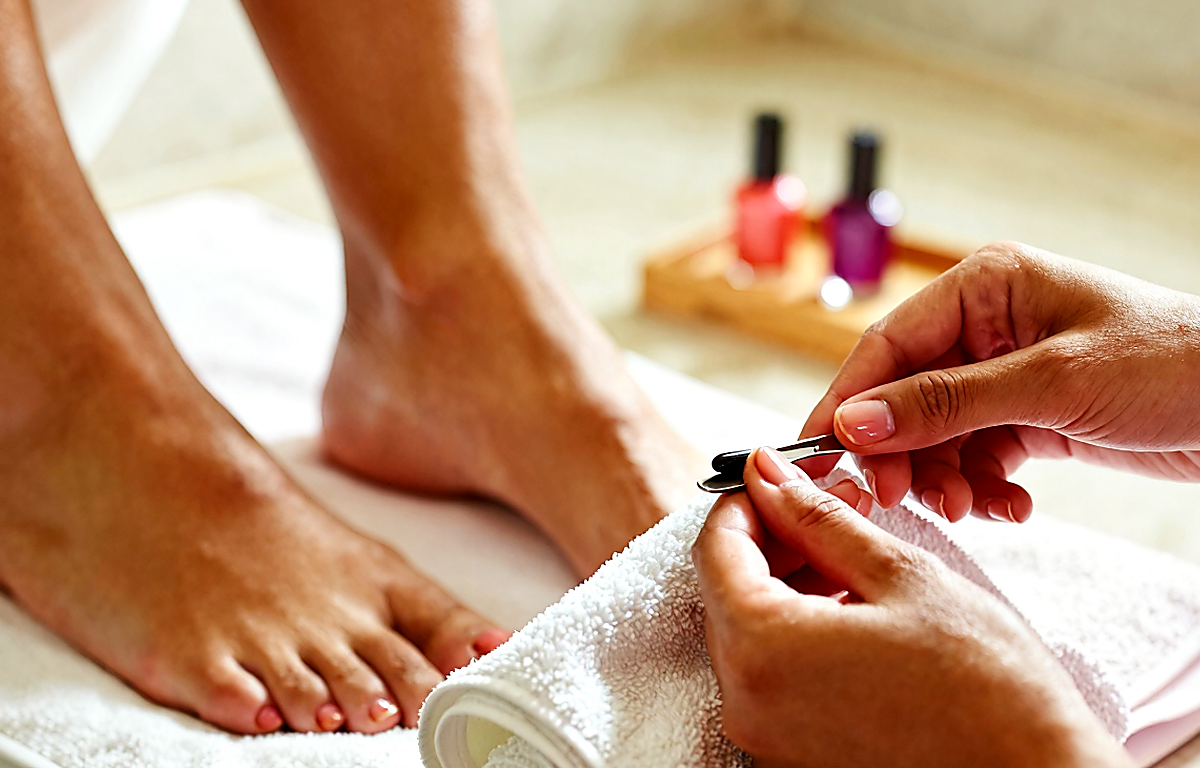
In summer, your feet are on display almost every day: open sandals, flip-flops, walks, trips, sand, asphalt, and heat quickly make the skin drier and a pedicure look less polished. The good news is that you do not need a long evening ritual to get a neat result at home. If your goal is to get your feet in order quickly, it is enough to focus on four steps: gently soften the skin, remove only what is extra, even out the nails, and finish with cream or a light polish. This is exactly the approach that gives feet a visually clean, fresh, well-groomed look in just 20–30 minutes.
The most common mistake with an at-home summer pedicure is trying to do everything at once and being too aggressive: soaking your feet for too long, cutting off too much skin, filing your heels until they squeak, and rushing through nail polish. As a result, the skin becomes even drier, and the effect lasts for less time than you would like. A regular but gentle approach works much better: a little care, but at the right time. Below is a clear plan that helps quickly freshen up your feet before going out, before a vacation, or after a week in open shoes.
What you really need for a quick at-home summer pedicure
To avoid turning the procedure into a complicated salon-style routine, put together a simple kit. Most of these things are already at home, and anything extra does not help here, it only distracts.
- A basin or foot bath with warm, not hot, water.
- A gentle cleanser for the feet.
- A towel.
- A foot file or a soft rasp.
- A nail file with a fine grit.
- An orangewood stick or cuticle pusher.
- Foot cream or a rich body cream.
- If desired, a base coat, neutral polish, or a clear top coat.
If you are really short on time, you can limit yourself to just three things: a foot file, a nail file, and cream. But if you want that truly fresh summer look, add light cuticle care and polish. In hot weather, clean natural nails with a transparent shine, milky shades, soft nude, or classic red look especially good.
For maintaining results day to day, lightweight body care that does not leave a sticky feel can also be helpful. In hot weather, many people prefer textures that absorb quickly: on this topic, the article about a lightweight body cream for summer without stickiness may be useful. Feet usually need a more nourishing option, but during the day and in the heat it is more comfortable to apply it moderately so there is no film-like feeling.
Express prep: how to soften the skin without drying out your feet
In summer, it is tempting to soak your feet for a long time first, especially if your heels have become rougher. But water that is too hot and long foot baths often work against you: the skin swells, it becomes easy to remove more than necessary, and then it dries out faster. For a quick at-home pedicure, 5–7 minutes in warm water is enough.
You do not have to add everything you have on hand to the water. Foam, salt, oils, herbs, and acids all at once will not make your feet look more groomed in a single session. Temperature and timing matter much more. Warm water helps soften the top layer, and a short soak makes the next steps easier and neater.
If you do not even have time for that, you can do a dry version: wash your feet, dry them thoroughly, and then file only the areas with noticeable dryness. Many people actually find this method works even better for them because it is easier to control exactly how much skin is being removed.
After the soak, be sure to pat your feet dry well with a towel, especially between the toes. In summer this is not a minor detail: moisture, heat, and closed shoes can increase discomfort. If you have persistent burning, pain, swelling, cracks that bleed, pronounced flaking, an unpleasant odor, or if you have chronic foot conditions, diabetes, or pregnancy-related increased skin sensitivity, it is better not to take an at-home pedicure into traumatic procedures and to discuss the condition with a doctor. At-home care is about neatness and comfort, not treatment.
Heels and dry areas: how to remove what is extra without injuring the skin
The most noticeable part of a summer pedicure is the condition of the heels and the sides of the feet. They reveal skin fatigue faster than the absence of nail polish. But it is important to remember this: the goal is not to make your feet perfectly smooth in one go, but to make them look neat and stop them from catching on fabric or shoes.
Choose a soft file or rasp and work without heavy pressure. Go over only the dry, roughened areas: the heels, the balls of the feet, and sometimes the area near the big toe. Your movements should be directed and short, not chaotic. If the skin has already turned pink, feels sensitive, or you notice warmth, it is time to stop. Heavy filing often gives the opposite effect: the dryness becomes more noticeable again after a few days.
What is better not to do:
- Do not cut rough skin with blades at home.
- Do not rub your feet with a very coarse rasp until you feel burning.
- Do not try to remove deep cracks on your own with an aggressive method.
- Do not use several exfoliating products on the same day.
If your feet only have mild dryness, 1–2 minutes of filing per area is enough. For a visual effect, that is usually more than sufficient. Then apply cream and let it absorb for at least a few minutes. The skin immediately looks calmer, lighter, and more even.
If the dryness is pronounced, it is better not to try to get “perfect heels” in one evening. It is much more effective to do a gentle treatment now and then apply cream at night for 3–4 days in a row. This strategy gives a more polished and stable result than harsh mechanical buffing once a month.
Toenails: how to shape them neatly without common mistakes
Even if the skin of your feet is not perfect, neat nails immediately make a pedicure look more put together. In summer, chips, an uneven edge, and overly short length are especially noticeable. That is why one of the fastest ways to refresh the look of your feet is simply to tidy up the shape.
It is better to trim nails straight across with a soft rounding of the corners using a file, rather than cutting deep curves. Excessive rounding at the sides can lead to discomfort and untidy regrowth. The edge should be even and should not catch on fabric or the inside of shoes.
The short algorithm is this:
- Inspect the nails and remove old polish if it is chipped.
- Shorten the length if needed.
- Use a file to even out the free edge.
- Gently push back the cuticle after a foot bath or shower.
- Remove only clearly visible hangnails without cutting away excess.
- Degrease the nail plate before applying polish.
For at-home care, it is better not to cut the cuticle aggressively. For a visually clean result, it is usually enough to push it back and remove dry skin along the edge. If the nails themselves are smooth and healthy, that alone is enough for the feet to look well cared for.
If you notice a change in nail color, soreness, thickening of the nail plate, pronounced crumbling, or unpleasant sensations when walking, do not try to hide the problem under dense polish. In such cases, a specialist consultation matters more than a decorative effect.
Polish for a summer pedicure: what to choose if you want it quick and pretty
An at-home summer pedicure does not have to end with a bright color. Sometimes the most stylish and practical option is a clear base, a glossy care product, or a milky sheer polish. These finishes are easier to apply at home, make minor unevenness less noticeable, and handle several days of active wear in the heat more easily.
If you want color, the most flattering universal options are:
- milky;
- sheer pink;
- beige nude;
- coral;
- classic red;
- a deep berry shade for an evening look.
For a quick at-home result, it is better to apply two thin coats than one thick one. Thin coats dry more evenly, smudge less, and look neater. Before polishing, it is important to degrease the nail, and afterward to give the polish enough time. The main enemy of an at-home pedicure is not a lack of professional skill, but rushing immediately after application.
If you do not like polish on your toenails, choose buffing without a strong shine and put the emphasis on skin care. A clean outline, even shape, and moisturized feet often look more expensive and fresher than bright polish on dry heels.
For vacation, a “minimum risk” strategy is convenient: a neutral shade that does not require perfect touch-ups every few days. Then even with active walking and beach time, the pedicure looks put together for longer.
How to make your feet look more polished in 10 minutes
There are times when there is simply no time for a full pedicure: an unexpected meeting, a trip, hot weather, open shoes, and you want to freshen up your feet quickly. In that case, do not try to repeat the whole ritual. You need a short plan that gives the maximum visible result in the minimum time.
Here is a practical express routine:
- Wash your feet and dry them thoroughly.
- Quickly go over the driest areas with a file.
- Trim or file only uneven nails.
- Apply cream to the heels and the tops of the feet, avoiding excess between the toes.
- You can add a drop of oil on the cuticles.
- If there is time, apply a clear coat or a thin layer of nude polish.
This format does not replace full care, but visually it changes a lot. The feet immediately look cleaner, softer, and neater. Sometimes that is exactly the goal—not perfection, but a polished summer look.
If the skin is very dry, there is a simple trick: after applying cream, put on thin cotton socks for 10–15 minutes while you get ready. This helps the cream work better and makes the surface of the feet noticeably smoother. The main thing is not to put on slippery open shoes right away if the cream has not absorbed yet.
How to maintain the result in summer so you do not have to start from scratch every week
A summer pedicure only seems difficult when care gets postponed until the feet have already become very dry. If you spread the steps throughout the week, the task becomes much easier. A short maintenance routine is enough, rather than a long deep-cleaning session for the feet.
A convenient plan can look like this:
- 1–2 times a week — a soft file for dry areas.
- Every evening or every other day — foot cream.
- After a shower — a little oil or cream on the cuticles.
- Once every 7–10 days — refresh the nail shape and polish.
- After the beach or long walks — thorough cleansing and moisturizing.
In summer, the condition of your feet is especially influenced by habits. If you wear only very flat flip-flops, walk a lot on dry and hot surfaces, forget about cream, and do not wash off dust, the skin becomes rougher faster. And vice versa, even simple measures help noticeably:
- do not walk barefoot for long on very hot surfaces;
- choose shoes in the right size so there is no constant friction;
- alternate open shoes with styles that have a softer, more stable insole;
- after a shower, do not forget to dry your feet thoroughly;
- do not leave chipped polish on for too long.
If you regularly use acid foot masks, peels, or strong exfoliating products, it is better to be especially careful with them in summer. Against the background of sun, friction, and frequent open shoes, the skin can become more sensitive. If irritation is pronounced, it is better to pause. If your care involves active ingredients and you have special medical recommendations, including restrictions during pregnancy or while using retinoids for the skin, it is safer to choose your care routine individually.
Common mistakes in an at-home summer pedicure
Even good cosmetics cannot save the result if the care routine itself is inconvenient or too aggressive. Most unsuccessful at-home pedicures are connected not with a lack of products, but with recurring mistakes.
What is worth paying attention to:
- Water that is too hot. It can increase dryness and makes the skin more vulnerable to over-filing.
- Trying to remove all roughness at once. After that, the feet often become even rougher.
- Cutting skin and cuticles unnecessarily. This increases the risk of irritation and does not give a neater result.
- Thick coats of polish. They take longer to dry and smudge more often.
- Lack of consistency. One big session is less effective than short care several times a week.
- Ignoring discomfort. Pain, burning, swelling, inflammation, oozing, or nail changes are reasons not to experiment at home.
Another common mistake is choosing a pedicure only for the color of the polish. In reality, in summer the eye most often notices the condition of the skin, the clean shape of the nails, and the overall look of the foot. So if time is short, it is better to invest first in basic neatness and only then in the decorative layer.
Sometimes people want to build at-home care into an overall summer beauty routine. This is a good approach: when body skin, feet, and exposed areas get regular but not overloaded care, the result looks more harmonious. The principle of minimalism helps here: it is easier to maintain a simple system than to keep starting over.
Who especially needs to be more careful with an at-home pedicure
An at-home pedicure suits many people when we are talking about gentle cosmetic care. But there are situations where it is better to lower the intensity of the routine and not aim for “perfectly polished” feet at any cost.
Extra caution is needed if:
- there are deep cracks, inflammation, or bleeding;
- there is pain when walking or treating the skin;
- there are pronounced changes in the nail plate;
- there are chronic conditions that affect the skin and feet;
- during pregnancy the skin has become more sensitive or swollen;
- there are doubts about active exfoliating products and intensive care.
In these cases, it is better to limit an at-home pedicure to gentle cleansing, careful nail filing, and moisturizing. If burning, pain, swelling, or other unpleasant symptoms do not go away, it is more appropriate to see a doctor. This is especially important when you want not simply to hide the problem, but to understand the cause of the discomfort.
Summer grooming does not require heroics. On the contrary, the most beautiful result usually comes when care is done calmly, regularly, and without unnecessary aggression. Feet should not look “overworked”—they simply need to be clean, soft, and neat.
Conclusion: a neat at-home summer pedicure does not take long if you know your priorities
To quickly make your feet look neat at home in summer, you do not need to set up a full salon on your bathroom shelf. Focus on the essentials: gently cleanse the skin, carefully treat dry areas, even out the nails, and finish with cream or a simple polish. This sequence is exactly what gives a noticeable, fresh, and aesthetically pleasing result without unnecessary effort.
If you maintain it with short regular steps, your feet will look well groomed all season, not just on pedicure day. And that is probably the best summer approach: not waiting for the perfect moment for a major routine, but doing small things on time—quickly, gently, and with purpose.