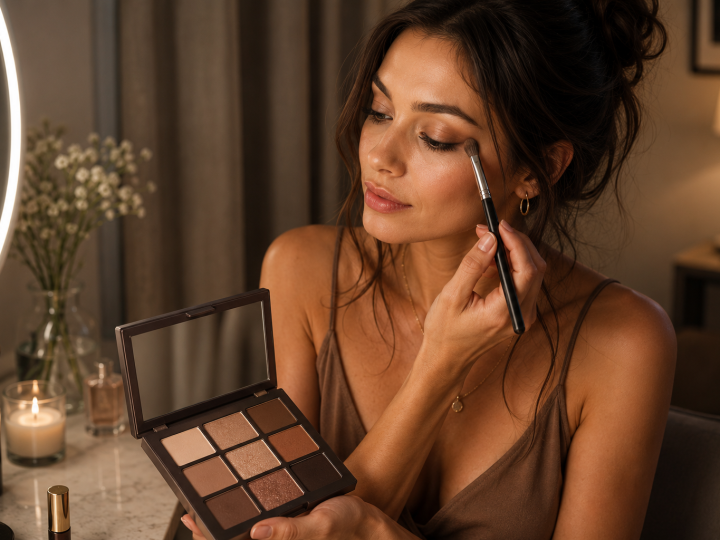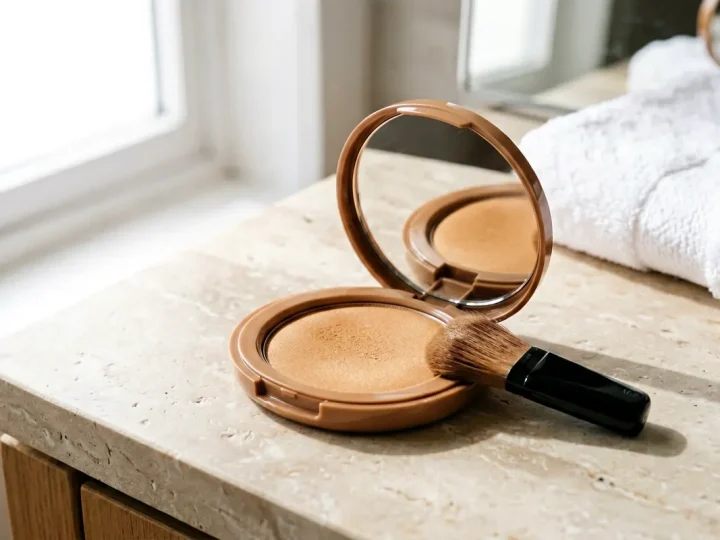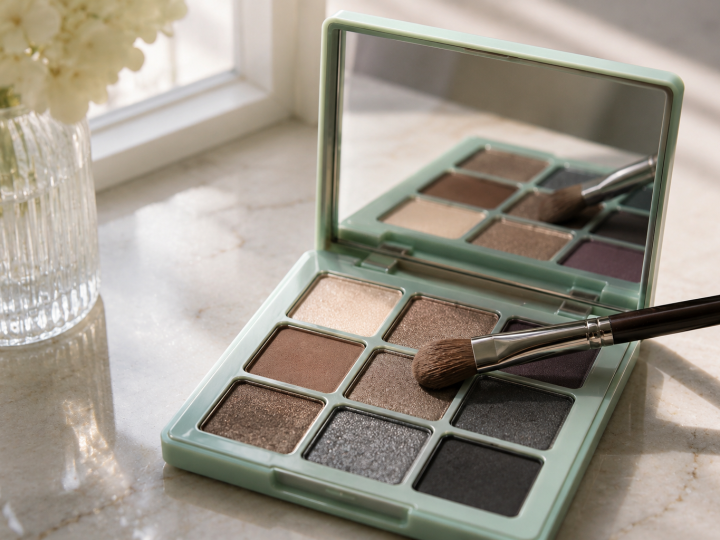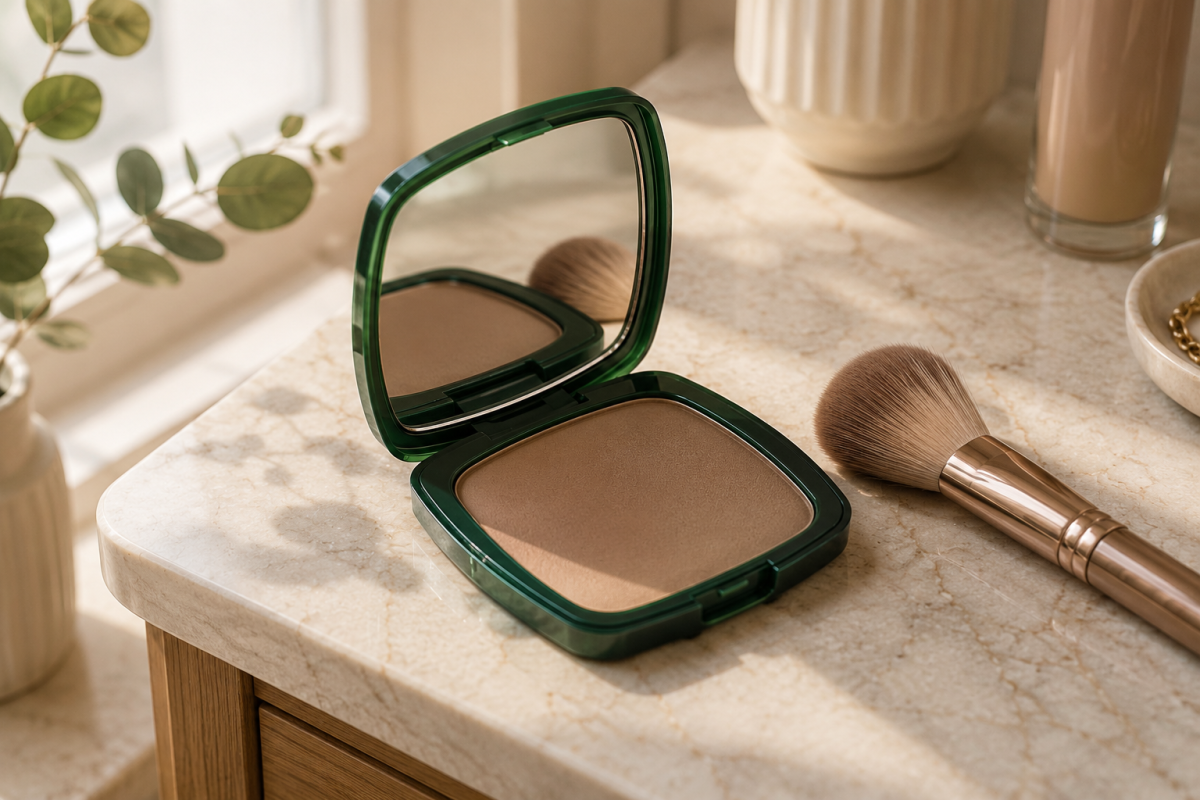
Cool Bronzer for Contour Without the Rusty Turn
It is 8:12, your base is already on, and you want just enough definition to wake your face up before the train or a first meeting. In that moment, bronzer only helps if it reads as a quiet shadow instead of a warm stripe that suddenly takes over the cheek. That is why a cool bronzer for contour is less about the word contour on the compact and more about what the tone does once it meets your actual skin in normal daylight.
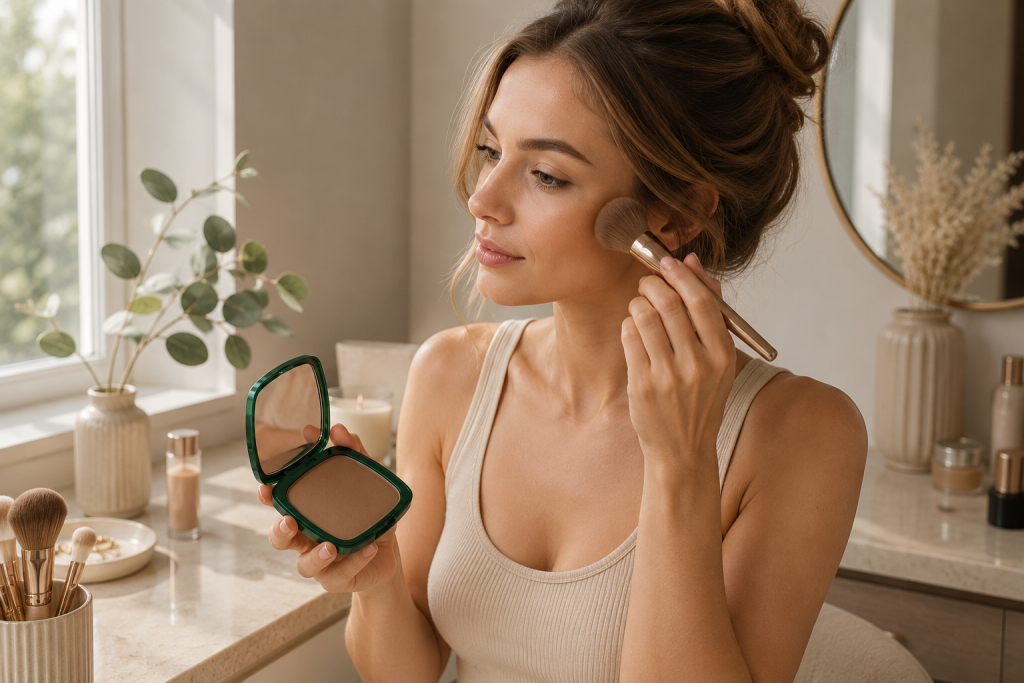
If you are trying to find a cool bronzer for contour, think about the rushed parts of real life: a quick office morning, makeup in the back seat before dinner, or a carry-on routine for a three-day work trip. Those are the moments when you notice whether the color stays soft and believable or turns too orange, too dark, or too powdery to fix without starting over.
The undertone check comes before the label
A compact can say sculpting, contour, or soft matte and still pull warmer than you expected. Store lighting often makes a shade look calmer than it really is, especially if the pan has a muted top layer but a warmer base underneath. For a minimalist reader, the useful move is simple: check the product near a window, then compare it mentally with the undertone in your neck, temples, and cheek hollows. If you need a bronzer for fair neutral skin, extra red or terracotta warmth shows up fast and can make the face look busier instead of more structured.
The shades that usually behave better for contour sit closer to taupe, grey-beige, or softly neutral brown than to honey bronze. They do not have to look flat, but they should stay controlled when blended out. A bronzer that looks beautiful as a beachy wash across the nose may still be the wrong bronzer for contour if your goal is definition before daytime makeup, not overt warmth.
Depth matters as much as tone
Undertone is only half of the story. The other half is depth. Even a cool shade can fail if it is several steps deeper than your natural shadow. The result is that telltale block near the temple or under the cheekbone that looks fine in the bathroom, then suddenly obvious in the office lift. This is one reason people keep searching for a bronzer for fair neutral skin and still come home with something they never reach for: the compact is not orange, but it is too strong for the pace and light of everyday makeup.
When you swatch, do not only ask whether the shade is pretty. Ask whether one light layer can disappear into foundation, tinted moisturiser, or bare skin without leaving an edge. If it takes active correcting with extra powder or blush, it is already asking too much from a weekday routine. The best contour bronzer usually looks almost underwhelming at first swipe, then becomes convincing once it is diffused.
Texture decides the rushed-morning result
Powder texture often separates the useful compact from the one that ends up forgotten in a drawer. A dry, stiff formula can cling to the exact places where skin is already a little textured or where SPF has not fully settled. A very creamy powder can go patchy if you are blending over a base that has started to set. If you are wondering how to avoid orange bronzer, start by looking beyond color alone: a smoother, finer powder is easier to keep sheer, and that sheerness is what stops warmth from building up too fast.
This shows up most clearly on mornings when you have seven minutes, not seventeen. A soft brush, a light hand, and one pass placed high and outward usually read cleaner than chasing a dramatic carved line. If the bronzer needs lots of buffing to stop looking chalky, it is not really a quick-routine product. Good texture gives you room to pause after one layer and leave the face there.
Where bronzer usually goes wrong
Most mistakes happen before the formula is even fully blended. The first is choosing warmth because it looks lively in the pan. The second is placing too much product too close to the centre of the face, where any orange shift becomes obvious. The third is expecting bronzer to create both colour and structure at once. When those jobs are mixed together, the finish often gets muddy. That is also how to avoid orange bronzer becoming a daily problem: keep placement narrow, start lighter than you think, and judge the result in daylight before deciding you need more.
A cool bronzer for contour earns its spot when it lets you look a little more pulled together without becoming the loudest part of the makeup. If the compact stays quiet on the skin, works with a fast brush, and does not force you into corrective blending at the door, it is doing exactly what contour should do.
This article is editorial and informational. Skin chemistry, climate, and individual sensitivity affect results; when possible, try a product before committing.