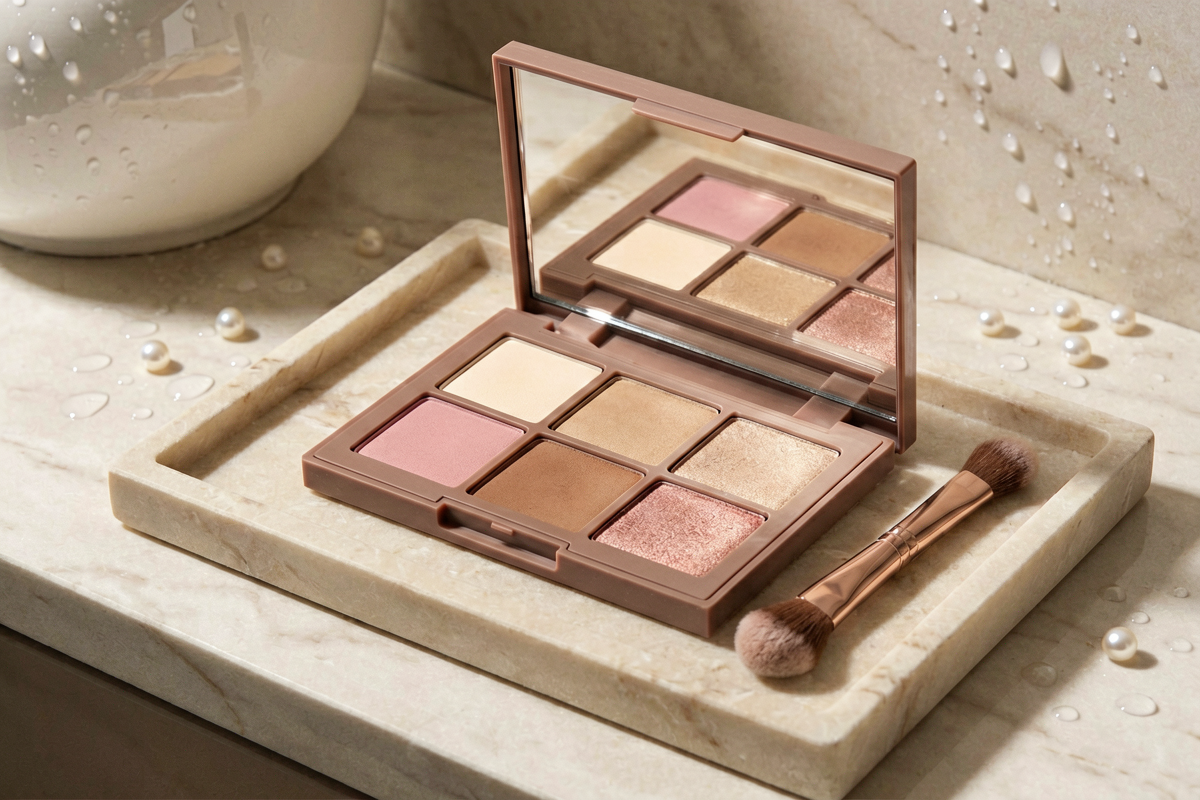
Everyday Eyeshadow Palette That Earns Its Spot
The real test for an eyeshadow palette is not how dramatic it looks under studio lights. It is whether you can reach for it at 7:40 a.m., do something polished in a few minutes, and still want to use the same compact before dinner without wiping everything off and starting again. That is where a quieter colour story wins. The best one is not packed with options for the sake of variety; it gives you a light matte, a transition shade, a deeper matte, and a satin that adds light without turning the whole lid glittery.
If you already wear shadow regularly, you probably know this frustration well: a palette can look useful in the pan and still become dead weight because half the shades blur into the same medium brown once they hit the eye. A good everyday choice feels edited. It helps you build shape fast, works in cold office light as well as warmer evening light, and makes the jump from weekday face to post-work plans feel easy rather than overthought.
What makes it genuinely useful
An everyday eyeshadow palette earns its keep when each shade has a clear role. One soft matte brightens the lid without looking chalky. One taupe or beige-brown transition shade gives the crease a quick, believable shadow. One deeper matte adds definition at the lash line or outer corner. Then one satin catches the light in a way that still feels grown-up in daylight. That structure matters more than a high pan count, especially if you do your makeup while answering messages, packing a tote, or getting ready in bad bathroom lighting.
Undertone is what separates a smart buy from a palette that sits untouched. A very orange-leaning story can fight cooler brows, muted blush, or winter skin tones, while a balanced neutral story tends to stay flexible. If you are looking for a neutral eyeshadow palette, do not just check whether the colours seem pretty next to each other. Check whether the light, medium, and deep shades actually read differently on the eye. When they do, blending gets faster and the finished look reads cleaner.
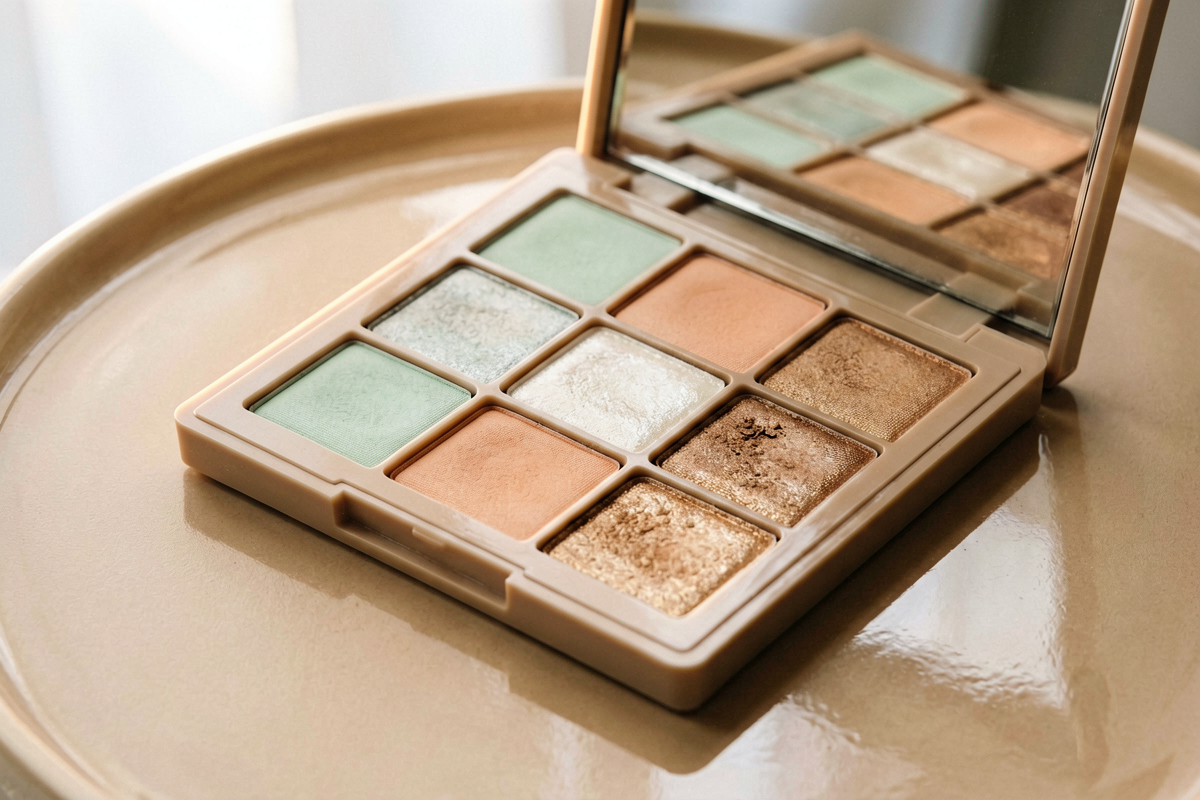
How it should work from desk to dinner
The best version of this purchase is practical. In the morning, you want two or three shades that can make the eyes look pulled together without a long blending session. Later, you want to deepen the outer corner, press a satin into the centre of the lid, and get a little more definition without muddying what is already there. That is why an eyeshadow palette for work and dinner should be judged by buildability, not by how loudly it performs in the first swipe.
This is also why a soft satin usually ages better than oversized sparkle in an everyday compact. A big glitter payoff can be fun, but it limits when you reach for the palette and can make texture look more obvious by noon. A steadier formula gives you more mileage. If you keep wondering whether you need a larger wardrobe of browns, you may actually need a better edited eyeshadow palette with clearer contrast between the shades you already know you use.
What to check before you buy
Start with the middle tones, because they make or break the whole compact. If two medium browns swatch almost the same, the palette is already wasting space. Then look at the finish of the light-catching shade: soft satin is usually more versatile than chunky shimmer. Pan size matters too. Tiny wells can be annoying when you are using a regular brush in a rush. And if fallout from the deepest shade seems hard to control, that glamorous smoky option may become a weekday nuisance.
It also helps to ask what gap the palette is supposed to fill. If you are shopping for a neutral eyeshadow palette because your current collection is all statement colours, a restrained set makes sense. If you already own three versions of the same beige-brown story, this is probably where duplication sneaks in. The better buy is the one that changes how quickly and cleanly you can get ready, not the one that simply repeats the mood board you already have.
Mistakes that make a calm palette feel boring
The most common mistake is buying for one beautiful swatch instead of for the full layout. The second is confusing a lot of similar mid-tones with versatility. The third is underestimating how useful a reliable transition shade is compared with another metallic. If you are deciding on an everyday eyeshadow palette, think in roles, not in isolated colours. A compact becomes far more satisfying when it can brighten, shape, define, and softly highlight without forcing you into extra products.
Be a little more cautious if your lids are sensitive, dry, or quick to emphasise sparkle. In that case, softer mattes and satins tend to feel easier to wear than a palette built around shimmer. The goal is not to own the biggest or most expensive case. It is to find an eyeshadow palette that survives real life: early meetings, evening plans, weekend packing, and the kind of repeat use that proves it deserves the space in your makeup bag.
This article is editorial and informational. Skin chemistry, climate, and individual sensitivity affect results; when possible, try a product before committing.