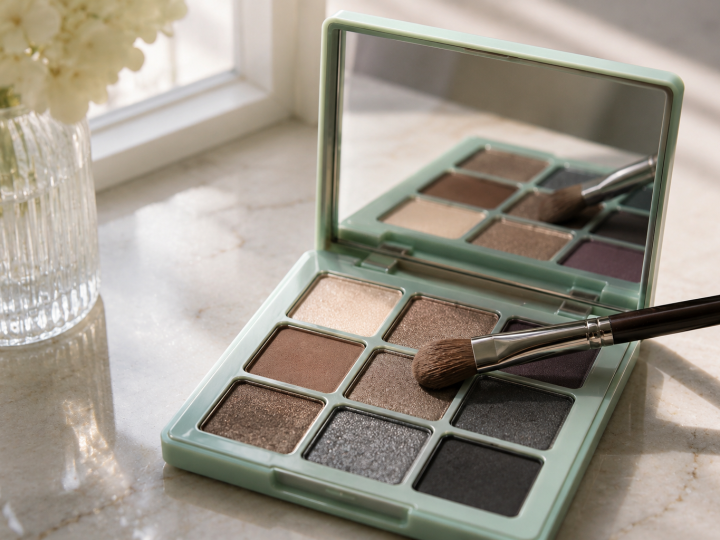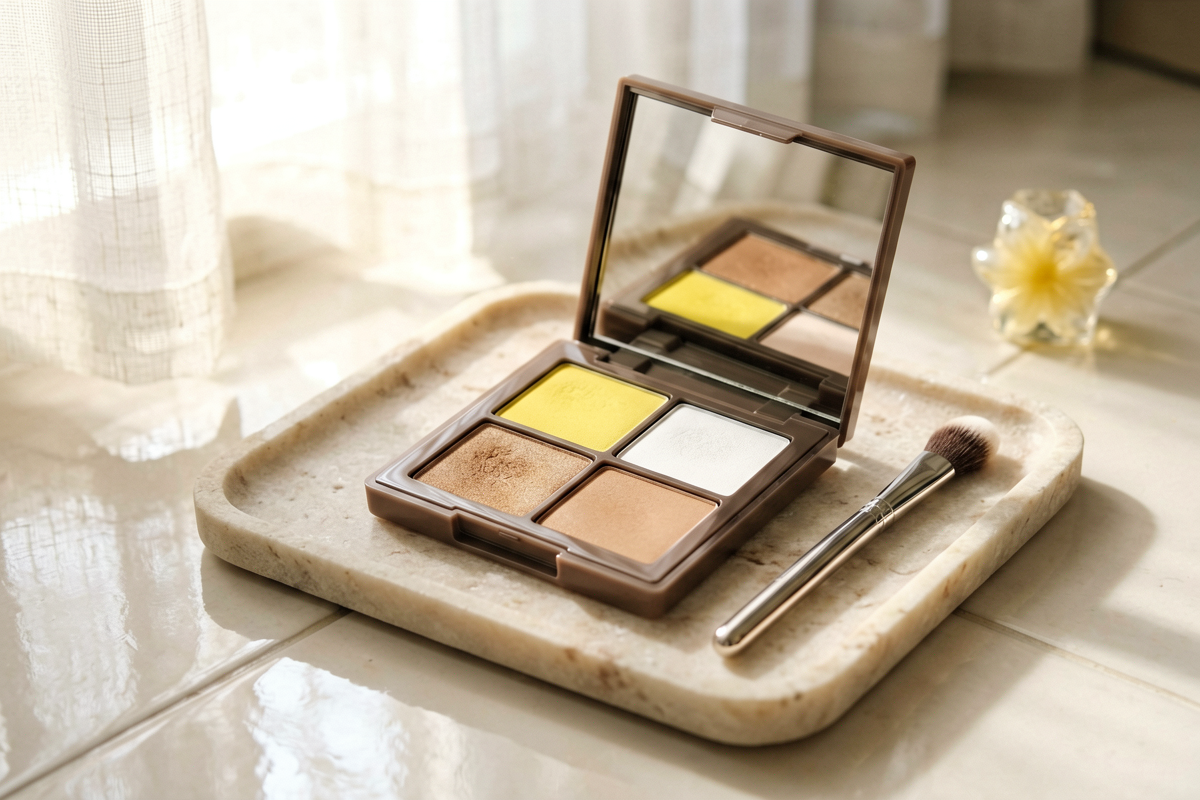
You know the feeling: you open a huge palette before work, admire it for five seconds, and still end up using the same two colors while the rest stare back untouched. That is exactly why a small eyeshadow palette can feel smarter than a “better value” mega option. When the shades are edited well, the morning look comes together faster, the evening tweak is easier, and you spend less time wondering what is supposed to go where.
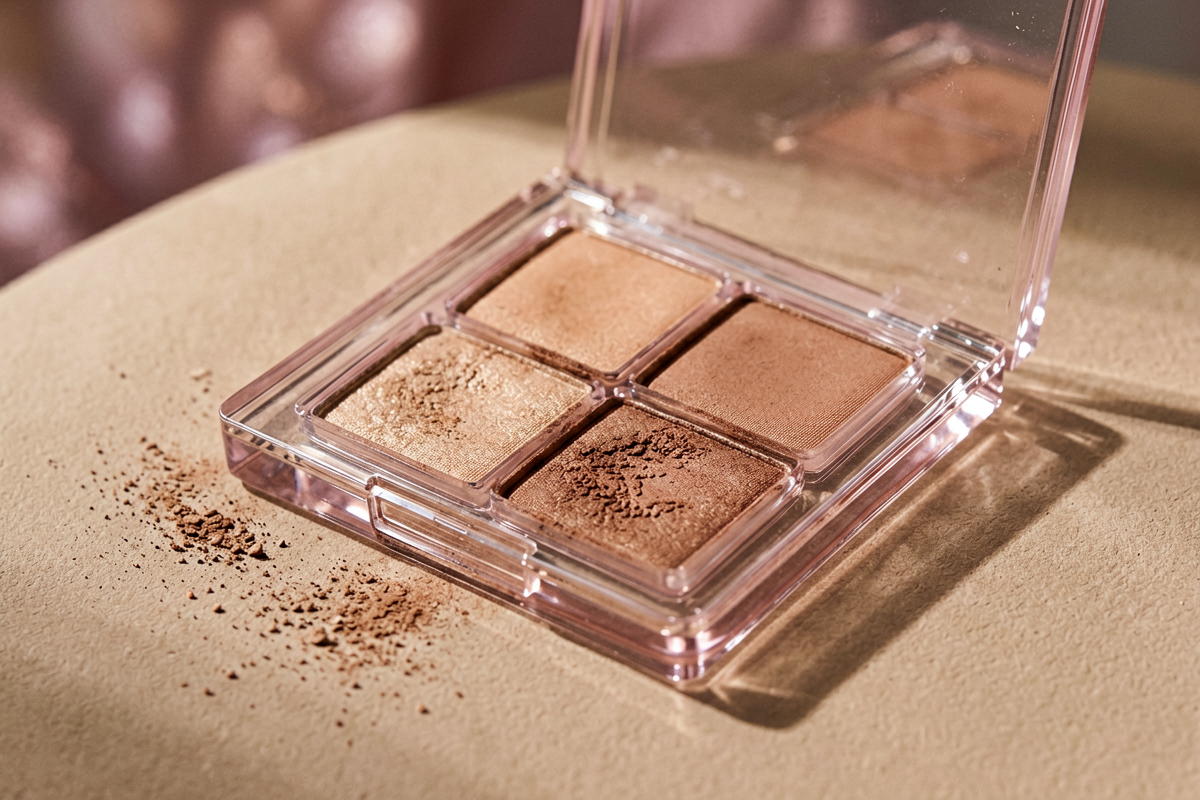
Why four shades often beat a giant palette
A compact eyeshadow palette does one useful thing for real life: it cuts decision fatigue. Instead of sorting through rows of near-identical browns, one icy shimmer you will never wear, and a dramatic black you only touch twice a year, you get a clear sequence. A light base opens the lid, a mid-tone shapes the crease, a deeper shade adds depth, and a soft sheen wakes up the center or inner corner. That order is easy to remember even if you are doing makeup in a rush.
It is also the easier format to repeat. The best small palette does not ask you to be newly creative every morning; it gives you a reliable pattern that still leaves room for small changes. On a weekday, that might mean two matte shades and mascara before a meeting. On a dinner night, the same eyeshadow palette can handle a deeper outer corner and a brighter center-lid accent without turning the whole look theatrical.
The shade mix that earns its keep
An eyeshadow palette with four shades works best when each pan has a job instead of repeating the same undertone. One light shade should smooth the lid rather than flash like a spotlight. One medium shade should read clearly in the crease. One deeper tone should create depth without skipping straight to “night out.” The fourth shade can be satin or softly luminous, but it should brighten the look rather than cover the whole lid in sparkle. That balance is what keeps the palette useful on ordinary days.
If you usually wear makeup before commuting, a neutral eyeshadow palette for mornings tends to be more practical than a trend-heavy color story. Taupe, beige, soft brown, muted plum, or gentle bronze are easier to layer without leaving harsh edges. The point is not to make everything beige forever; it is to own shades that can look polished in daylight, then become slightly richer when you add liner or a deeper outer-corner pass after work.
What to check before you buy
First, look for contrast that still feels wearable. In the pan, four shades may look different, but on the eye two middle browns can collapse into one muddy result. Second, pay attention to texture. Dry mattes can make a simple look feel harder than it needs to be, while a chunky shimmer often creates fallout instead of brightness. An easy eyeshadow palette for beginners should feel forgiving with a basic brush and your fingertip, not only under perfect studio lighting.
There is also the everyday logistics question. If your makeup bag is small, if you do touch-ups in the office bathroom, or if you pack light for a weekend away, bulky packaging becomes dead weight fast. A useful eyeshadow palette should open cleanly, let you see the shades quickly, and feel intuitive enough that you can apply it half-awake without second-guessing the order. Convenience is not a minor bonus here; it is part of why the purchase ends up getting used.
How to keep the look from getting busy
The easiest mistake with any eyeshadow palette is starting with the darkest shade because it looks the most exciting. In practice, the cleaner route is still light first, then medium, then depth only where you want shape. That keeps the eye makeup readable and gives you room to stop early if the look already feels complete. On low-energy mornings, two shades may be all you need. On evenings when you want a little more definition, the third and fourth shades should build on that base instead of fighting it.
That is why a four-pan format can be so steadying for someone building routine rather than collecting color. A good eyeshadow palette does not win by offering endless possibilities; it wins by staying clear, flattering, and repeatable. If every shade has a role, if the textures layer without patchiness, and if the palette can take you from desk light to dinner plans, it has already done more than many larger options that mostly live untouched in a drawer.
This article is editorial and informational. Skin chemistry, climate, and individual sensitivity affect results; when possible, try a product before committing.