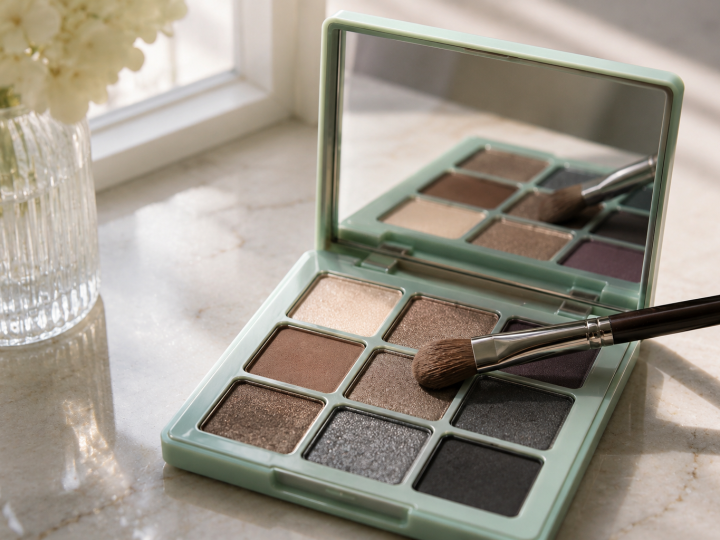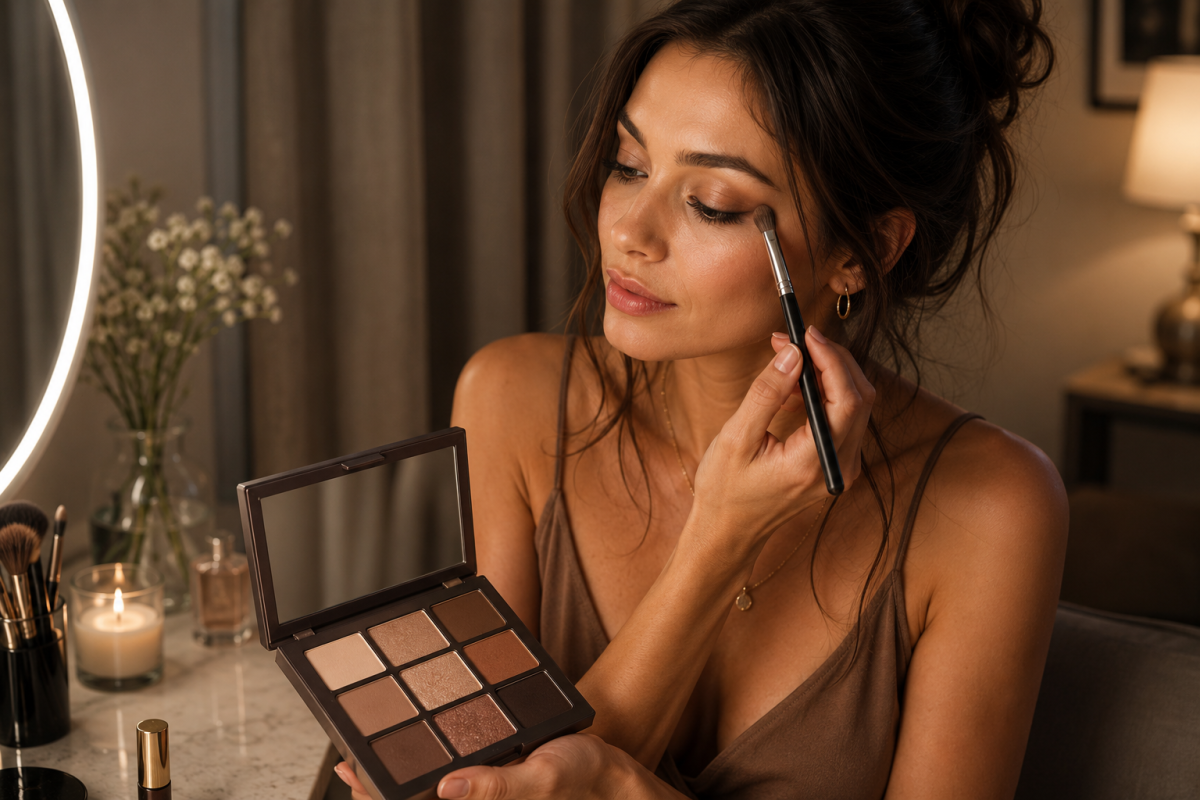
There is a point in your makeup life when a giant rainbow palette stops feeling exciting and starts feeling like visual clutter. On a regular Tuesday, what helps more is an eyeshadow palette that lets you get from coffee to office lighting to dinner plans without pausing to correct muddy edges. A neutral edit earns its place when it looks composed up close, layers quickly, and never makes a simple eye look feel heavier than the rest of your face.
That is why the best neutral option is usually not the biggest one. An eyeshadow palette becomes reliable when the shades have distinct jobs: one soft matte to smooth the lid, one mid-tone to sketch shape, one deeper brown to anchor the lash line, and one satin or quiet shimmer that wakes the eye up without turning nine in the morning into evening glam. If you are trying to build a kit that works across real days, logic matters more than spectacle.
What makes a neutral palette feel useful
The strongest palettes are edited, not crowded. You do not need five versions of the same beige if all of them disappear into one another after blending. You need a clear light shade, a believable transition, a deeper matte with enough contrast, and one finish that gives life to the centre of the lid. If you are comparing a neutral eyeshadow palette for work, look for this spread first. It is what keeps the result polished rather than flat, especially when you only have a few minutes before a meeting.
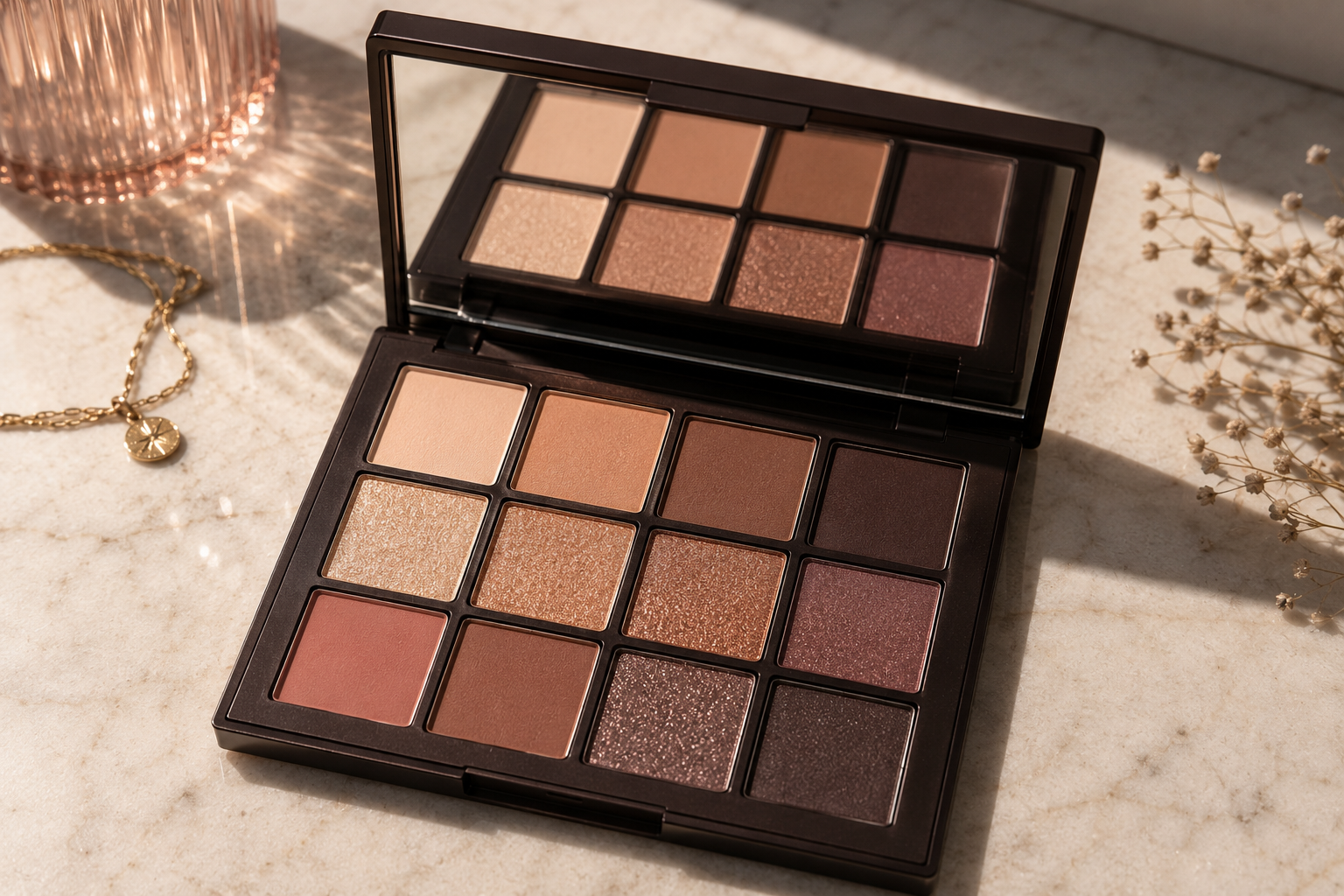
Texture matters just as much as colour. An everyday neutral look often falls apart not because the tones are wrong, but because the shimmer is too wet-looking for daylight or the deepest matte turns patchy as soon as you build it. A good eyeshadow palette lets you create shape in two or three passes, not ten. The more experienced you are with makeup, the more obvious that difference feels: you stop chasing novelty and start noticing how easily each pan does its job.
How it should move from morning to evening
The real test is not a perfect vanity setup. It is the kind of day that starts under cool office light, continues through messages and back-to-back errands, and ends with a dinner you did not fully plan for. In that rhythm, the useful question is how to choose a neutral eyeshadow palette that scales without turning muddy. The answer is usually simple: can the daytime eye come from two mattes and one soft sheen, then deepen with the same brown rather than a completely separate colour story?
That is also where undertone saves or ruins the effect. Very warm bronzes can fight with blush, lip colour, and even your brow tone faster than they seem to in the pan. Dusty mauves can look elegant at night, then slightly tired under harsh morning light. A balanced neutral edit is calmer. If you want an everyday eyeshadow palette without fallout, you are usually also looking for something that behaves under pressure: no glitter dropping onto concealer, no satin that grabs in one spot, and no depth shade that forces a total redo.
The mistakes that make neutral look dull
The first mistake is buying duplicates. Many neutral releases look different in packaging, then collapse into the same three shades once they hit the skin. The second is choosing warmth just because it seems more flattering in a quick swatch. On the eye, too much orange or bronze can make the whole face feel overcommitted for a normal workday. The third is assuming one sparkly pan can replace structure. Without a proper mid-tone matte, even a pretty shimmer has nowhere convincing to sit.
Another issue is contrast. If the light, medium, and deep shades sit too close together, the eye never gets real dimension. If they are too far apart, you spend half your routine blending the jump away. This is why a neutral eyeshadow palette for work should feel almost boring in the best possible way: every shade is there for a reason, and none of them asks for rescue. On rushed mornings, that practicality is what keeps a neutral look elegant rather than forgettable.
A quick filter before you buy another one
Before adding another compact to your drawer, ask whether it solves a problem your current lineup still has. Maybe you need a softer transition shade, a better deep brown, or a satin that reads polished instead of glittery. Maybe you already own all of that, and what you really want is the feeling of a fresh purchase. Thinking this way makes how to choose a neutral eyeshadow palette much clearer than reading brand promises about versatility.
In the end, a good neutral pick is not a compromise. It is the version that works with your weekday face, your after-hours plans, and the amount of time you actually give yourself in the mirror. When the shades are distinct, the finishes stay calm, and the layout makes sense, an eyeshadow palette stops being another pretty object and starts acting like one of the most dependable things in your makeup bag.
This article is editorial and informational. Skin chemistry, climate, and individual sensitivity affect results; when possible, try a product before committing.